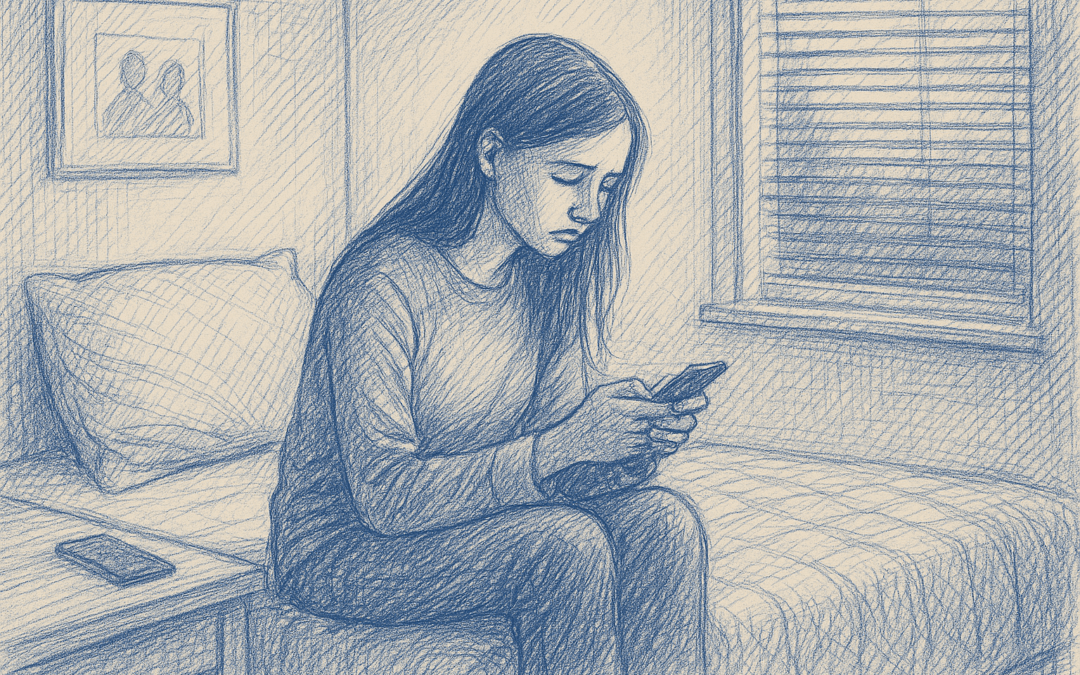
It’s 2:47 a.m. and I’m scrolling through Instagram, watching strangers toast champagne in Santorini, cuddle golden retrievers, and post “raw” captions that somehow still feel filtered. I’m not sad, exactly. But I’m not okay, either. I’m lonely. And I know I’m not alone in that.
In a world where we can FaceTime across oceans and “like” a hundred photos before breakfast, why do so many of us feel so disconnected? The answer is messy, layered, and deeply human if we’re brave enough to look.
The Digital Age: More Screens, Fewer Souls
We were promised connection. Instead, we got curated highlight reels and dopamine loops. A 2025 Baylor University study found that both passive scrolling and active posting on social media were linked to increased feelings of loneliness over time. Even when we’re engaging, we’re often left feeling emptier than before.
It’s not just the quantity of our interactions that’s changed, it’s the quality. We’ve traded deep conversations for comment threads, shared silences for typing indicators. And in doing so, we’ve lost something vital.
The Health Toll: Loneliness as a Silent Epidemic
Loneliness isn’t just a feeling; it’s a health crisis. The U.S. Surgeon General has equated the health risks of chronic loneliness to smoking 15 cigarettes a day. It increases the risk of heart disease, stroke, dementia, and premature death.
Mental health suffers, too. Lonely individuals are more prone to depression, anxiety, and suicidal ideation. The emotional pain of isolation can be as real and as damaging as physical pain.
The Vicious Cycle: Social Media and Loneliness
It’s a cruel irony: we turn to social media to feel connected, but it often leaves us feeling more isolated. A longitudinal study among Chinese college students found a bidirectional relationship between loneliness and problematic social media use—each feeding into the other over time.
The more we scroll, the lonelier we feel. And the lonelier we feel, the more we scroll. Breaking this cycle requires conscious effort and, often, a reevaluation of our digital habits.
The Generational Divide: Gen Z and the Loneliness Surge
Gen Z, the first generation to grow up entirely in the digital age, is experiencing unprecedented levels of loneliness. A 2025 report revealed that one in four young Australians reports loneliness as a daily stressor. Social media, while offering avenues for connection, often exacerbates feelings of isolation among youth.
The constant exposure to others’ curated lives can lead to feelings of inadequacy and exclusion, further deepening the chasm of loneliness.
The Illusion of AI Companionship
In an attempt to address the loneliness epidemic, tech leaders like Mark Zuckerberg have proposed AI companions as a solution. While AI can offer temporary comfort, it cannot replace the depth and complexity of human relationships. Overreliance on AI risks diminishing the value of genuine human interaction and may lead society to neglect essential social infrastructure.
True connection requires vulnerability, empathy, and shared experiences—qualities that AI, no matter how advanced, cannot authentically replicate.
Reclaiming Connection: Steps Toward Healing
Addressing loneliness in the digital age requires intentional action:
Digital Detox: Set boundaries for screen time. Designate tech-free zones and times to foster real-world interactions.
Community Engagement: Participate in local events, volunteer, or join clubs to build meaningful relationships.
Mindful Technology Use: Use social media intentionally. Engage in content that uplifts and connects rather than isolates.
Seek Support: If loneliness becomes overwhelming, reach out to mental health professionals or support groups.
By taking these steps, we can begin to rebuild the social fabric that technology has, in some ways, unraveled.
A Personal Reflection
I remember a time when I felt truly connected—not through likes or comments, but through shared laughter and unfiltered conversations. It was messy, imperfect, and real. In our pursuit of digital perfection, we’ve lost sight of the beauty in imperfection.
Let’s choose to be present. To look up from our screens and into each other’s eyes. To embrace the awkward silences and the unfiltered moments. Because in those spaces, true connection thrives.
I was halfway through my master’s in architecture, you know, living on coffee and blind optimism, when the rheumatologist slapped the words “systemic lupus erythematosus” on my file. Cheers, doc. Overnight my wrists puffed up like angry balloons, and every drafting pen felt heavier than a pint of Guinness. Lecturers talked about taking time off, friends offered the usual “sure everything happens for a reason” guff. I nearly believed my career was headed for the bin.
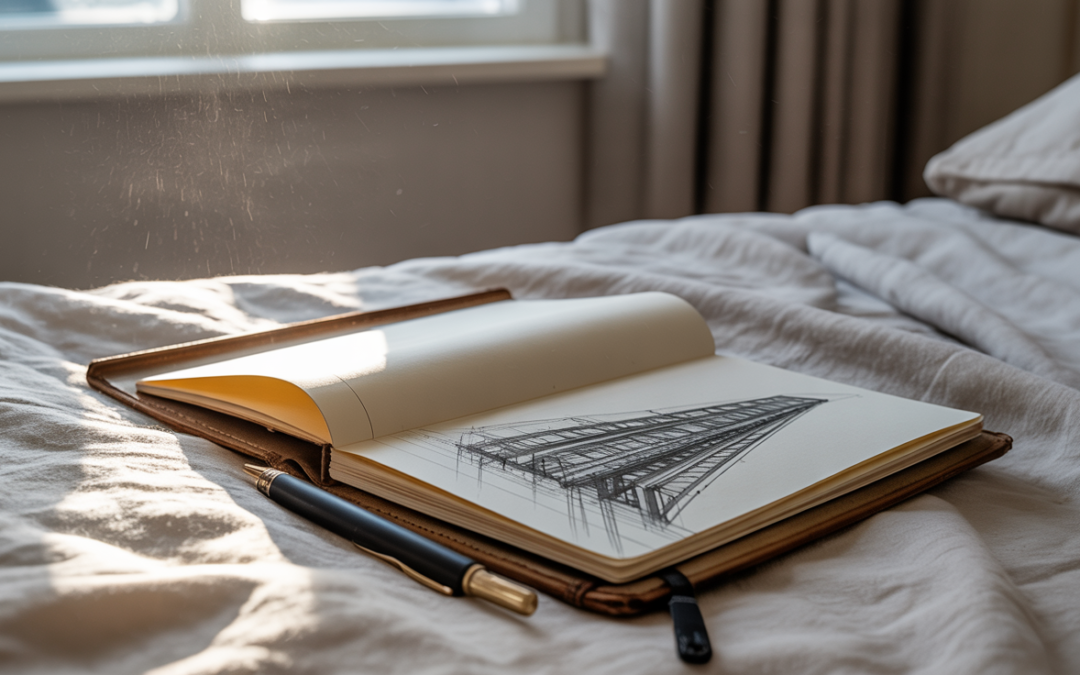
Then one grim November night, rain lashing the windows, fever spiking so hard I was talking shite to the ceiling, I saw the shadows on the plaster twist into mad, gothic cathedrals. Proper haunted-house stuff. Half-delirious, I grabbed a sketchbook and scribbled the shapes: crooked arches, spiral staircases that went nowhere, angles that would give my old geometry teacher a heart attack. The pain blurred my lines, but it also kicked perfectionism out the door.
Weeks of bed rest turned into the best studio I never asked for. Between hot-water-bottle shifts and Netflix binges, I filled page after page with structures that bent, curved and tilted like bodies that refuse to behave. By the time I limped back to campus, I had a portfolio full of buildings that could actually cradle people with dodgy joints, light sensitivity, all that craic. My professors were gobsmacked, they called the work radical.
Fast-forward to now: clients hunt me down for offices with nooks to stretch stiff backs, galleries with railings you want to hug, studios lit so migraine brains don’t feel like they’re in a nightclub. Lupus still barges in uninvited, some mornings I’m drafting from bed, stylus propped against a feck-off stack of pillows, but it’s taught me architecture isn’t about rigid grids; it’s about sheltering messy, miraculous humans.
Yeah, illness nicks plenty, but it also leaves breadcrumbs to new ideas. Every dawn, joints creaking like old floorboards, I glance at those ceiling shadows and think: grand, let’s build something weird and kind today.
If you have a story to tell or a question for the team, email us at hello@kateandginger.com
Anyone with ADHD or OCD will tell you, overthinking isn’t some quirky personality trait; it’s a full-contact sport. My brain is like a hamster on a cocaine bender in a wheel made of existential dread. Once it gets spinning? Good luck stopping it.
I’ve overanalyzed texts, tone of voice, facial expressions, past convos, future convos, and whether or not the barista actually wished me a good day or was just being polite. If overthinking burned calories, I’d be shredded.
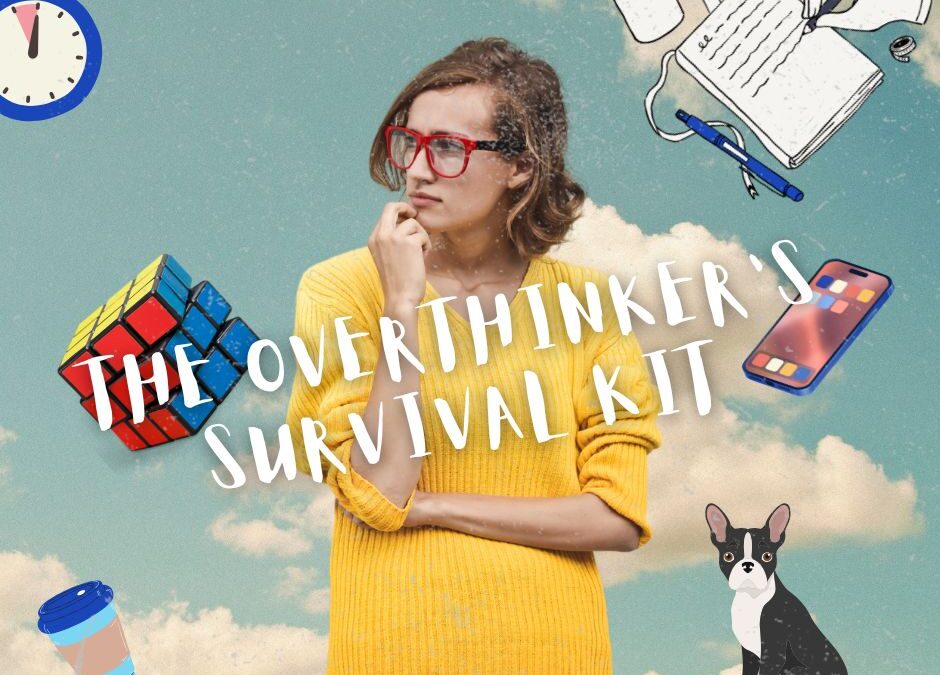
But because I like to function (and not spiral into a puddle of what-ifs every time I misread a text), I’ve cobbled together a little overthinking survival kit. Not foolproof. Not therapist-approved. But it’s kept me afloat.
1. Puzzle Games
Word puzzles. Moving blocks into tiny spaces. Anything that demands just enough brainpower to hold my attention without tipping into frustration. When I’m doing a puzzle, my mind finally has something useful to chew on instead of gnawing on my own self-esteem.
There’s something weirdly soothing about finding the right fit, solving the next word, and clicking the piece into place. It gives my brain the satisfying illusion of control and resolution, which is all it really wants.
2. The “Fuck It” Timer
This one’s weirdly effective. I set a timer for 20 minutes and give myself permission to obsess the hell out of whatever I’m spiralling about.
I go full doom mode. Google things I probably shouldn’t. Rant in my notes app. Make imaginary arguments in the shower.
And when the timer goes off? That’s it. My brain had its tantrum. Time to rejoin humanity.
3. Walking My Dog in Nature
It’s not just the fresh air or the trees. It’s the rhythm. The leash in my hand. My dog sniffing the same patch of grass like it’s a holy relic. It’s ordinary, grounding, and so gloriously not about me.
Sometimes we walk in silence. Sometimes I talk to him like he’s my therapist with four legs. Either way, being outside with him resets something in me. It reminds me I have a body, a world, a life beyond my noisy head. It’s one of the most grounding ADHD coping tools I have.
4. Writing It Out (Usually in Poem Form)
When the mental noise is too loud to ignore, I write. Not a to-do list or a journal entry. I write poems. It’s like turning the chaos into something beautiful, or at least something shaped.
The structure, the rhythm, the hunt for the right word; it all forces my brain into focus. By the time I’m done, whatever had its claws in me has usually loosened its grip. It’s how I calm an anxious mind when nothing else is working.
5. One Person Who Gets It
Not someone who will fix it. Not someone who will say “just let it go.” Just someone who will go, “Yep. That sucks. I do that too.”
Sometimes we don’t need a solution. We just need to not feel like a lone freak in a sea of normal.
None of this is magic. My brain still spirals. But now I don’t spiral alone. I have tools. I have touchstones. I have a way back.
So if your mind is a loud, relentless bastard sometimes too? Welcome. You’re not broken. You’re just thinking real hard in a world that rarely makes sense.
If you don’t have someone to vent to, I’ve set up a Facebook group for people to safely come and let off steam, share their stories, and talk to the ether without judgment. Join the Kate & Ginger Mental Health Circle on Facebook
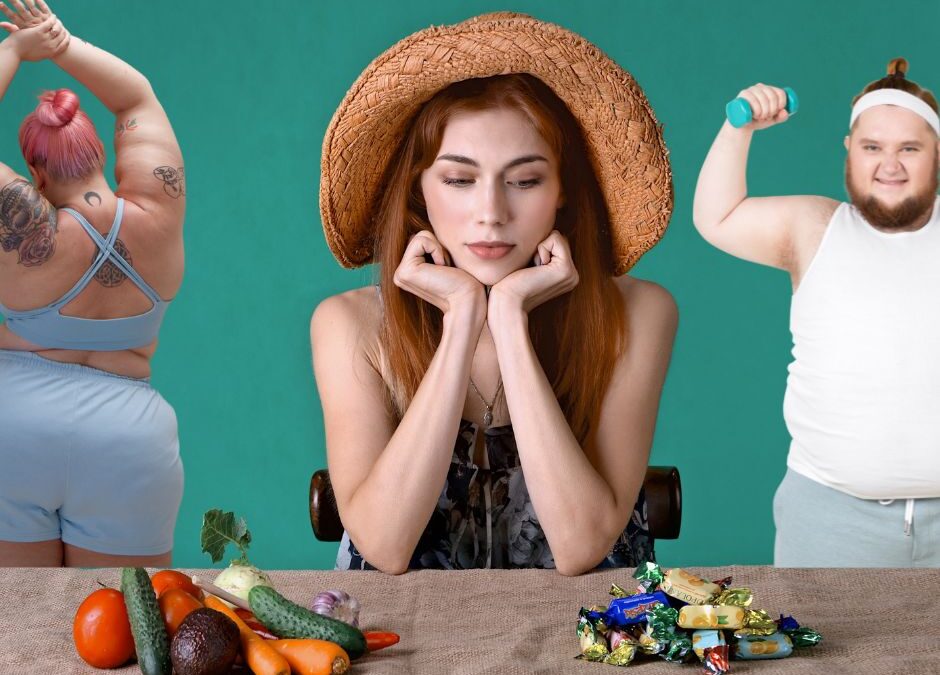
Let me tell you a secret. I’ve danced with every damn diet under the sun; keto, intermittent fasting, Banting, and that unholy grapefruit cleanse that basically turned me into a bloated, vitamin-deficient rage monster. Spoiler: I didn’t find health. I found constipation. And maybe scurvy.
We all know someone who swears by their meal plan like it’s a cult. “It changed my life!” they proclaim with the wild-eyed fervour of someone who hasn’t eaten bread in six weeks. And hey, maybe it did change their life, for the better. But here’s the thing no glossy diet book or smug wellness influencer will say out loud: bodies are not IKEA furniture. You don’t follow the same manual and get the same result.
Same goal, wildly different wiring
Let’s say two people want to feel better in their skin. One loves rules, macros and spreadsheets. The other? They spiral into food obsession the second MyFitnessPal chirps at them. One thrives. The other starts questioning their entire existence because they drank a cup of coffee. (Yes, a cup of coffee.) (Yes, that was me.)
Here’s what the diet industrial complex conveniently skips:
Genetics impact how we burn, store, and crave food.
Hormones run the hunger and energy show.
Neurodivergence; ADHD, autism, anxiety, can make rigid routines feel like handcuffs.
Chronic illness? Now we’re talking meds, fatigue, pain, and bodies that say, “Yeah, we don’t do that here.”
So, when your co-worker drops 20 pounds on keto and you just end up sobbing in your pantry? That’s not weakness. That’s biology. That’s your body asking, What the actual hell is this?
Exhibit A: Real people, real mismatches
“I tried intermittent fasting. Supposed to feel focused. I got migraines and dreamed about bagels.” – Lia, 29
“Paleo made my sister a CrossFit queen. I tried it and my IBS went DEFCON 1.” – Sam, 41
“Counting calories helped me feel in control… until I became terrified of fruit. Bananas, Kate. Bananas.” – Maya, 35
These aren’t failures. These are data points. Proof that your body is not a broken version of someone else’s success story. It’s just… yours.
What actually works? Curiosity over control.
What if the goal wasn’t to “succeed” at a diet, but to get curious about what actually makes you feel good?
What if instead of punishing yourself into someone else’s miracle, you asked:
Does this food make me feel energised?
Do I feel grounded or anxious when I eat this way?
Am I hungry, or am I following a rule?
That’s not weakness. That’s intelligence. That’s self-respect.
And no, it doesn’t come with an affiliate code or a #bodygoals before/after post. It comes with a relationship to food that doesn’t feel like war.
Newsflash: Suffering ≠ Success
Health is not a prize you earn by hating yourself hard enough. You don’t need to choke down bone broth and silence your hunger to be worthy of respect, or love, or your own damn body.
Let me say this louder for the people in the back: If a plan is making you feel like hell, it’s not you. It’s the plan.
Because the best “diet” isn’t the fastest, trendiest, or most punishing; it’s the one that meets you where you are, with grace, not guilt. That’s the kind of success that actually lasts.
So maybe the real revolution isn’t another cleanse. Maybe it’s choosing to believe your body isn’t the enemy.
What about you? Ever been wrecked by a “perfect” plan?
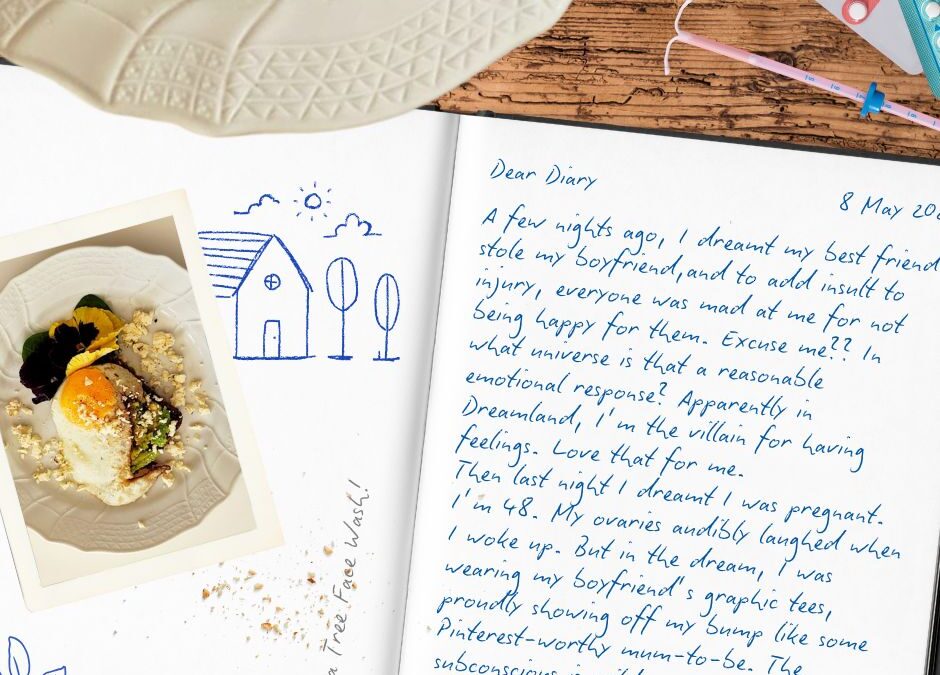
A few nights ago, I dreamt my best friend stole my boyfriend—and to add insult to injury, everyone was mad at me for not being happy for them. Excuse me?? In what universe is that a reasonable emotional response? Apparently, in Dreamland, I’m the villain for having feelings. Love that for me.
Then last night I dreamt I was pregnant. I’m 48. My ovaries audibly laughed when I woke up. But in the dream, I was wearing my boyfriend’s graphic tees, proudly showing off my bump like some Pinterest-worthy mum-to-be. The subconscious is wild.
In real life, I’ve been having weird, sweat-inducing, doubled-over-in-agony pelvic pains and suspect it’s time to say goodbye to the IUD that’s been living rent-free in my uterus for a while now. I’ve been dreading having it removed. Not quite as bad as having it inserted, but still—hello!!! A little anaesthesia wouldn’t hurt.
I mentioned this to my Mother, and, bless her, she warned me to be careful I don’t fall pregnant. At 48… with cyst-infested ovaries? It would be an act of the divine. (SFX: angels singing)
Still, the dream left a strange warmth behind. I don’t have children—I couldn’t (unless you count the four-legged, fur-covered kind)—but that dream baby felt oddly real. Maybe it’s just hormones. Or gas. Or the fact that I became an aunt again recently, and my new niece is absolute perfection. I’d love to be more present in my nieces’ and nephews’ lives, but I live on the other side of the world. I suppose that makes me a digital aunty. A pixelated presence with a Wi-Fi connection and a whole lot of love.
It’s weird. And a little sad. Call me old-fashioned, but I want to hug the people I love. Not just double-tap their faces on a screen.
Speaking of hugs—Bugsy (my dog) prefers his affection delivered in flying leaps and enthusiastic face-licks. Not exactly subtle, but I get the message. Imagine if humans did that. Note to self: Get some tea tree face wash.
So yes, last weekend we stayed up talking till 3 am, laughing like teenagers, like there wasn’t a chronic illness or middle age looming in the background. Was it irresponsible? Definitely. Was it worth it? Absolutely. Sometimes, connection matters more than rest. (MS doesn’t care about my emotional growth. It wants naps. Now.) Still, sometimes the pain is worth the priceless joy of two souls connecting.
Which brings me to today: I am completely out of spoons. No cutlery left in the drawer. My battery is flat, my tank’s empty, the engine won’t even turn over. I had another one of those weird spells yesterday where I just… shut down. One minute I was upright, the next I was horizontal and unconscious—like a phone that forgot to warn you it’s on 1%. It’s happening more often. Still trying to figure out what it is.
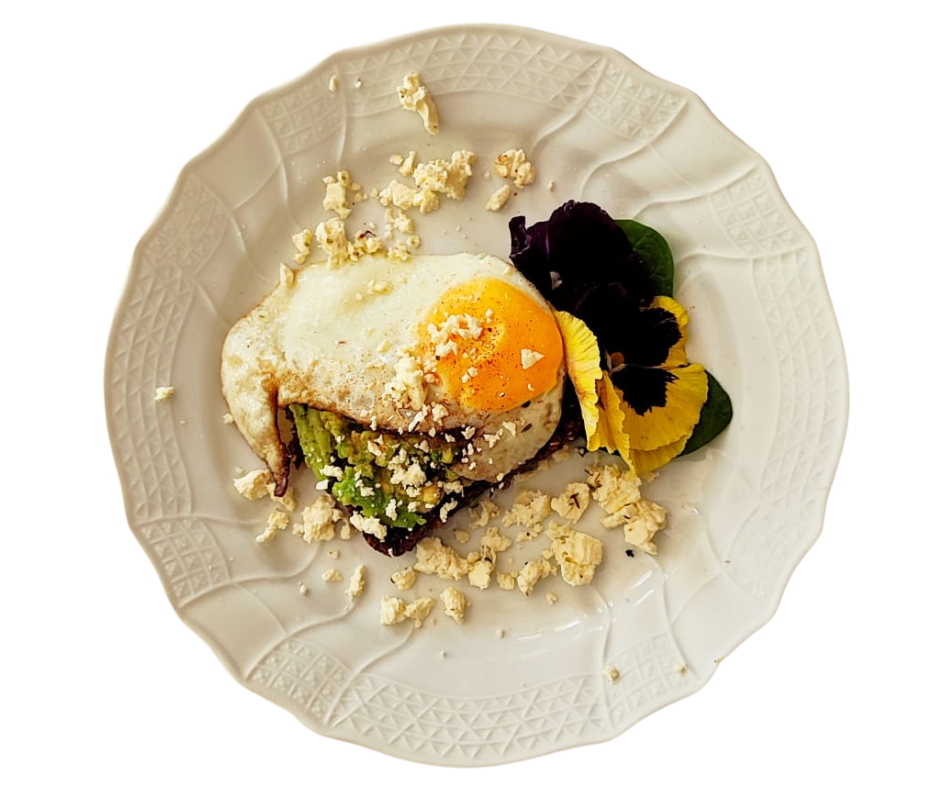
I made a beautiful lunch disguised as breakfast. (Don’t come for me, I don’t eat before 11 am unless bribed.) Toasted seed loaf, smashed avo, egg, spinach, feta, and edible flowers—because I’m clearly in my edible flower era. They make the plate look happy. And honestly, if your food can’t spark a little joy, what even is the point?
Anyway, I’m rambling. That’s what happens when you’re sleep-deprived and slightly hormonal with a head full of dreams and a body full of meh. Someone, please bring me coffee. Or a hug. Or maybe just a soft place to nap where no one expects anything from me for at least 12 hours.