Rest Like a Rebel: Why the Soft Life Still Feels So Damn Hard
Let’s talk about something no one warns you about when you start unlearning hustle culture: rest guilt.
Even now, after years of therapy and self-work, rest still makes me feel like I’m doing something wrong.
I’ll be lying down—genuinely exhausted—and my brain will whisper that old poison: You should be working. You’re wasting time. You’re falling behind.
It’s not just internal. It’s cultural. We live in a world that worships busyness and treats slowing down like a character flaw. Choosing the soft life? That’s practically a subversive act.
I used to think rest was something you had to earn
Back when I was still trying to prove I was “normal” enough to keep up with a productivity-obsessed world, I saw rest as a luxury. A reward. Something you got after you did everything else: cleared the inbox, made dinner, replied to every text, pushed through every signal your body was sending.
But here’s the thing: the list never ends. The emails don’t stop. And if you live with chronic pain, burnout, trauma, neurodivergence, or literally any human vulnerability, waiting until it’s all done means you’ll never, ever rest.
The soft life; this idea of living gently, of choosing rest and slowness over grind and self-abandonment, isn’t something I just “have.” It’s something I have to actively choose. Every single day.
Some days I choose softness. Some days I don’t.
Some days, I override every signal my body sends. I hustle. I numb out. I spiral. The voice of internalised capitalism tells me I’m lazy, and I believe it.
But on the days I do choose rest?
It changes everything; not in some dramatic, movie-montage kind of way, but in small, sacred shifts.
Like:
Letting myself wake up without rushing or doomscrolling.
Drinking tea without multitasking.
Crying in the bath without apologising to myself.
Watching something light and letting that joy be enough.
These aren’t indulgences. They’re survival. They’re the daily rituals of someone trying to live outside the grind. Someone practising rest as resistance.
Softness isn’t weakness. It’s power in a quieter voice.
We don’t talk enough about how hard it is to choose the soft life in a culture built on overwork. It’s easier to stay busy than to feel. Easier to push through than to sit with what’s underneath.
But every time you choose rest, even when it feels wrong, you’re undoing a little piece of the lie that says your worth is in your output.
You’re reclaiming your humanity.
Maybe the real revolution isn’t about never feeling rest guilt. Maybe it’s about doing it anyway. Choosing softness. Slowing down. Giving yourself care without a justification.
The world doesn’t need more burned-out people who’ve forgotten how to breathe.
It needs people who’ve come home to themselves.
People who say no without a paragraph of explanation.
People who laugh, and cry, and rest, and rage; and don’t apologise for any of it.
Still feel guilty for resting? Yeah. Me too.
You’re not alone. You’re not lazy. You’re just unlearning a system that never had your best interest at heart.
Want to explore this more? Drop a comment below and tell me: What’s your relationship with rest right now? Let’s talk about it. Let’s make softness a conversation, not a secret.
Let’s start with a confession: I haven’t cried over a forehead line. That little guy can stay. But the chicken neck situation I’ve got developing? That’s a different story. One day I caught my reflection mid-turn and thought, When did I become someone who Googles “best neck creams 2025” at 11 p.m.?
It’s not vanity, it’s grief, confusion, a weird kind of identity crisis. Because no one prepared us for the moment when our outsides start changing faster than our insides.
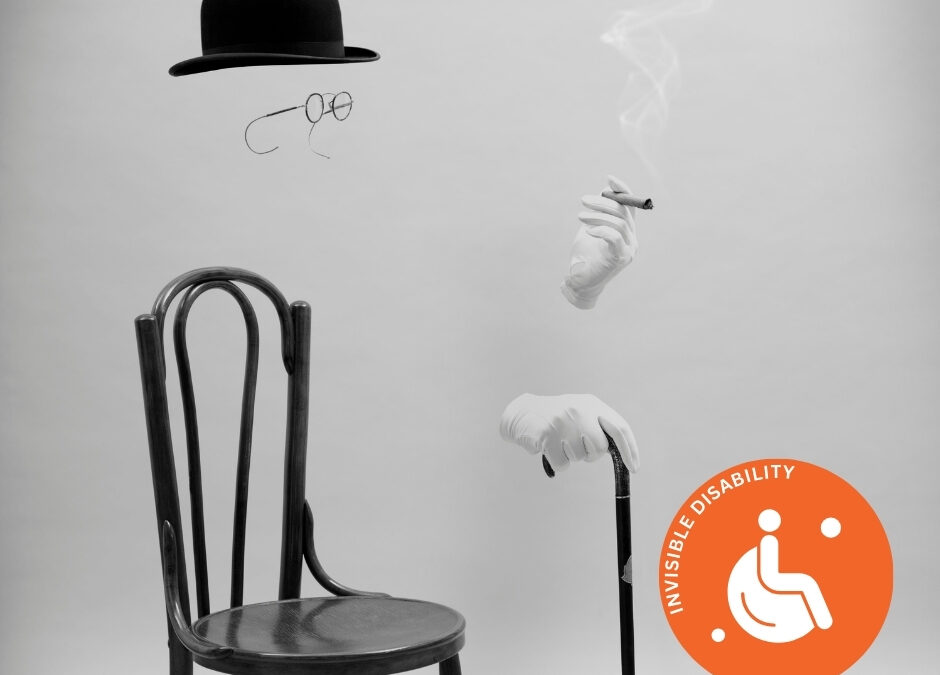
And just like that, the invisibility spell begins.
The Disappearing Act
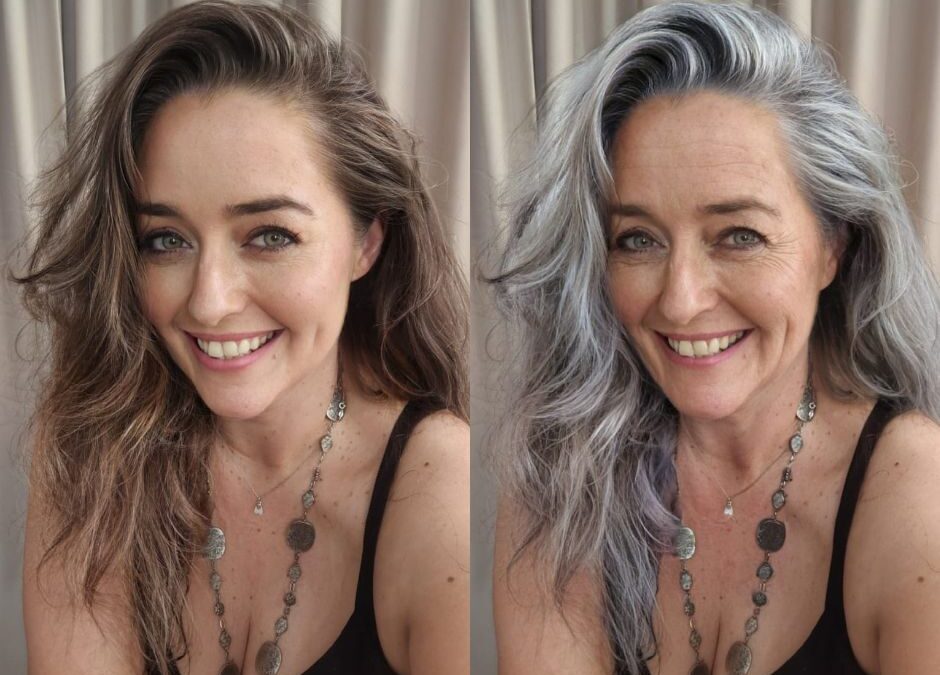
Women don’t age; we vanish. One wrinkle, one grey hair, one birthday over 40 at a time. You hit a certain age and suddenly:
You’re too old for that dress
Too “tired-looking” for that role
Too loud to be cute, too quiet to be seen
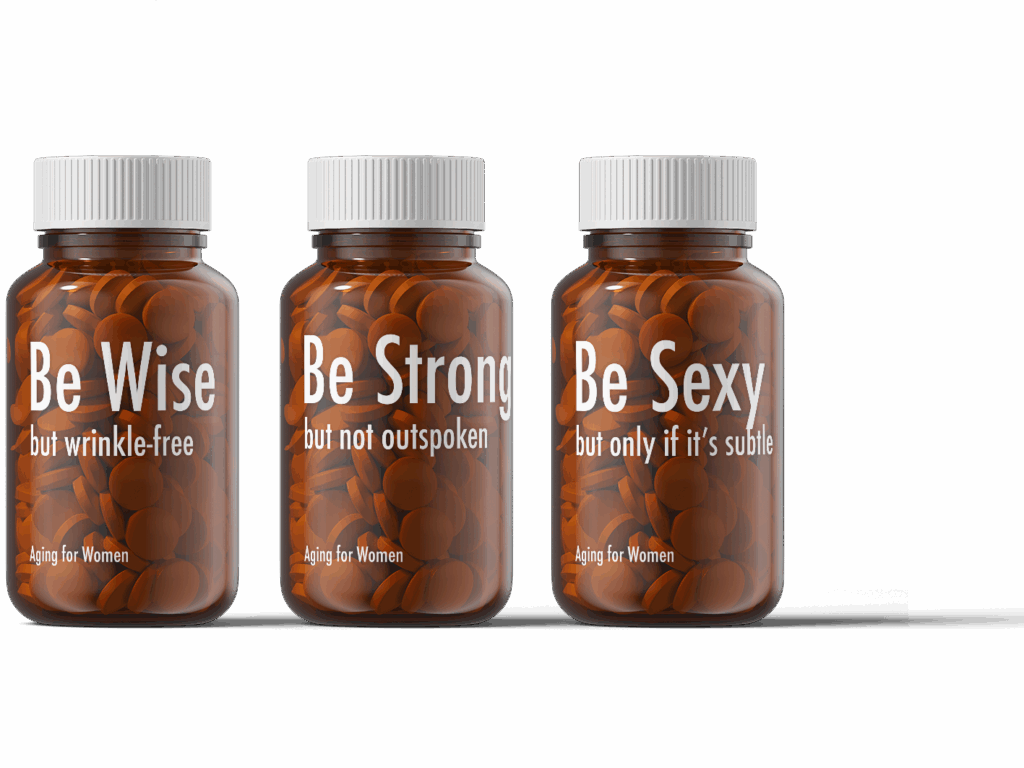
We’re told to be grateful for health, for wisdom, for “ageing gracefully.” But what they really mean is, Disappear quietly. Be wise, but wrinkle-free. Be strong, but not outspoken. Be sexy, but only if it’s subtle. God forbid you want to feel seen without apology.
The $60 Billion Lie
Here’s a fun fact: the anti-ageing industry is worth over $60 billion. That’s billion with a B; built on our fear of becoming irrelevant. Serums, supplements, surgeries, and shame. They sell us youth in dropper bottles and injectables, promising to erase the years that supposedly make us unworthy.
But here’s what no one’s selling: acceptance. Confidence. Visibility. The right to show up, as we are, age and all, without apology.
We’re not allowed to look older or talk about the shame we’re made to feel about it. So we go quiet. We hide. We smile through the Botox and pretend we feel empowered, when really, we feel erased.
What They Never Told Us About Ageing
No one warned me that midlife would come with so much shedding: of skin, of people, of illusions. And weirdly, it’s kind of beautiful.
Because under all that shedding? There’s me.
More sure-footed. Less willing to shrink. No longer willing to measure my worth in how easily I can be digested by a youth-obsessed culture.
And yes, I still want to feel beautiful. But on my terms. Not because a brand told me what “ageless” should look like.
What If We Refuse to Disappear?
What if we stopped spending our power on pretending we’re not aging and started investing it in showing the hell up as we are?
What if we:
Showed our lines and told the stories behind them
Refused to shrink our bodies, voices, or joy
Wore the damn red lipstick, or didn’t, for ourselves
Started seeing midlife not as the beginning of the end, but the beginning of being seen
Because the truth is, we were never meant to fade. We were meant to ignite.
So, what now?
I don’t have a tidy five-step plan to age gracefully. I’m not here to sell you a serum or preach a mantra. I’m just here, 40-something, noticing neck sag and still becoming, still shedding, and saying, Let’s burn the invisibility cloak.
Let’s get louder.
Let’s get unapologetically seen.
And let’s get something else straight while we’re here: I’m too damn tired from carrying around this much accumulated age-acquired wisdom to give a flying fuck if someone thinks I shouldn’t wear something, or should be dyeing my hair, or shouldn’t speak the way I do. I’m not going to be quiet for the sake of someone else’s comfort.
This is me. Warts, wobbles, and all.
Yes, I’m squishy. Yes, gravity is trying to make a slow meal of me. But that doesn’t diminish my worth. Not one bit. I’ve got stories to tell, love to give, and ideas to birth, and a hell of a lot to offer the world and future generations. And so do you!
What about you? Have you felt the slow fade into invisibility after 40? What would it look like to rewrite that story?
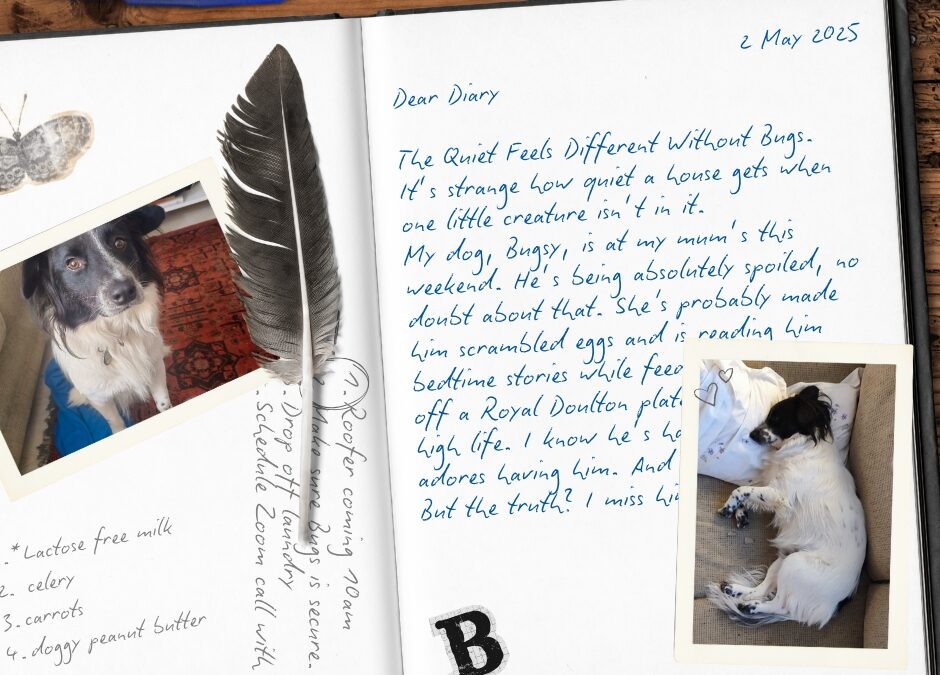
It’s strange how quiet a house gets when one little creature isn’t in it.
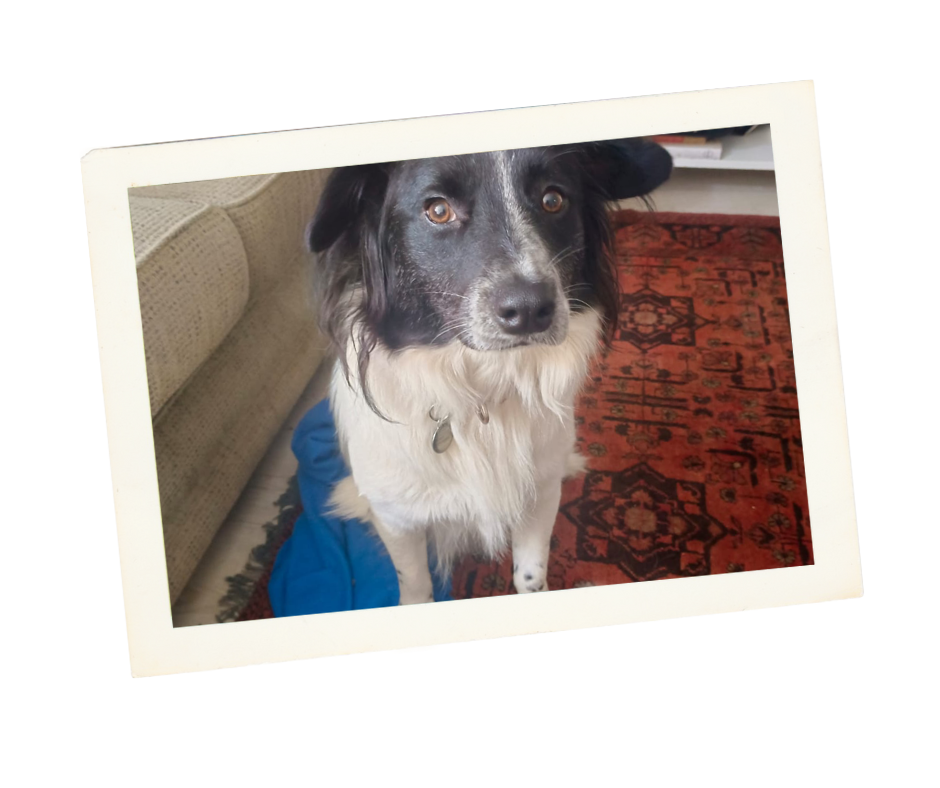
My dog, Bugsy, is at my Mum’s this weekend. He’s being absolutely spoiled, no doubt about that. She’s probably made him scrambled eggs and is reading him bedtime stories while feeding him snacks off a Royal Doulton plate. He’s living the high life. I know he’s happy. I know she adores having him. And he loves her too.
But the truth? I miss him like hell.
It’s only the second time we’ve been apart since I adopted him a year ago, and I feel a bit like I’ve misplaced a piece of my heart. I keep expecting to hear the jingle of his collar or feel his weight settle next to me on the bed. My eyes keep flicking toward the door like he’s about to burst through it at any second. But he won’t. Not till Sunday.
I miss his presence. His energy. His ridiculous snoring. He’s my baby. My child. My constant.
And yet, there’s something really beautiful about this too.
Letting go, even just for a weekend, is a practice. It’s a reminder that love doesn’t vanish just because someone’s not physically there. It’s about trust. About knowing that connections hold, even when they stretch.
Sometimes we hold on tight because we’re scared. Of change. Of distance. Of losing the very things that give us joy.
But love, real love, doesn’t fall apart when you give it space. It deepens.
I like that I can give Bugsy this time with someone who loves him. That I can share his joy. That I don’t need to control every moment to feel connected. And even though I miss him, I know we’ll both be better for it.
The silence is loud without him. But it’s not empty.
There are days my body feels like a battlefield. Days when getting out of bed is a full-contact sport. Days when nothing fits right, nothing looks right, and my reflection feels like it belongs to someone else — someone heavier, sicker, older, and more broken than the version of myself I still carry around in my head.
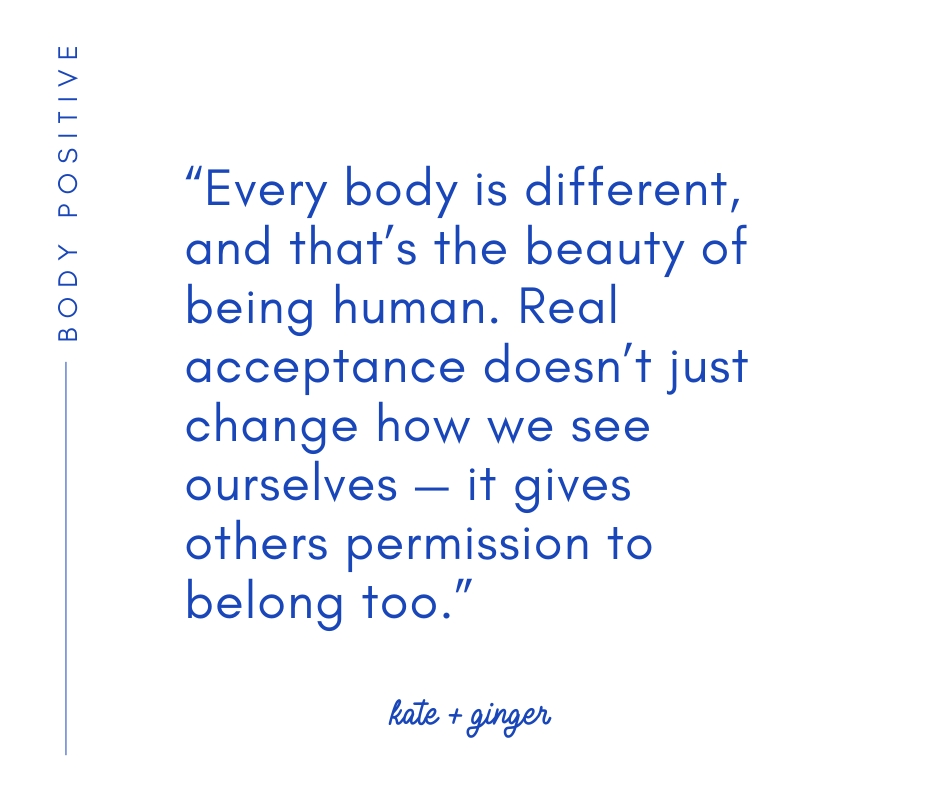
If you know that feeling — that deep, gut-punch disconnect between who you are and what you see — then you already know: Body positivity isn’t always about love. Sometimes, it’s just about survival.
Body respect: the version of self-love that doesn’t require a mood ring
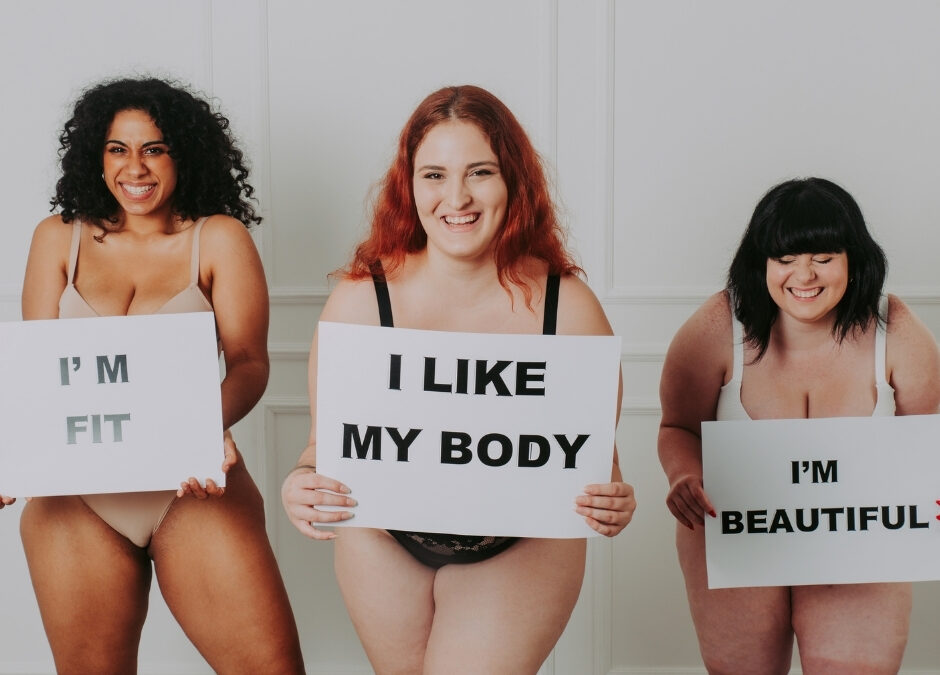
For most of my life, I thought body positivity meant waking up every morning, throwing on a bikini, and twirling in front of a mirror, shouting, “I’m a goddess!” (Newsflash: That’s not reality. That’s an Instagram ad.)
When you’re living with chronic illness, disability, trauma, aging, or just…being a human being in an unpredictable body — forcing yourself to “love” everything all the time is another impossible standard. Another stick to beat yourself with.
So I stopped chasing love. I started chasing respect instead.
Feeding my body even when I’m mad at it.
Stretching gently, even when it feels stiff and foreign.
Dressing in clothes that fit me, not the me I “should” be.
Taking rest seriously, not as a guilty secret, but as a freaking necessity.
Speaking to myself like I would to a dear friend who’s fighting hard to stay alive.
It’s not glamorous. It’s not always photogenic. It’s real healing.
The world profits off our self-hate. I’m opting out.
The wellness industry, the beauty industry, even the so-called “body positivity” movement sometimes, they all whisper the same garbage: “If you just try harder, spend more, punish yourself longer — you’ll finally be good enough.”
You know what? I’m tired. And I’m not buying it anymore.
This body — right now, as it is, on its best day and its worst — is good enough. Not because it looks a certain way. Not because it performs a certain way. But because it’s mine. Because it carries me through all of it: the heartbreaks, the flare-ups, the ordinary Tuesdays, and the small, stubborn joys.
That’s worth respecting.
How I endeavour to practice body respect (even when I don’t feel like it)
Here’s what it looks like on a normal, messy Tuesday:
I move when I can, how I can. Sometimes it’s yoga. Sometimes it’s hobbling to the couch. Both are valid.
I feed myself like I deserve nourishment. No punishing diets. No apology meals.
I rest without guilt. Productivity culture can kiss my very tired, very worthy ass.
I set boundaries with media. If my feed makes me hate my body, I unfollow, block, delete, walk away.
I celebrate functionality over appearance. This body digests food. It hugs my people. It lets me laugh until I snort. That matters more than what it looks like.
I’m not aiming for perfect self-love. I’m aiming for loyalty. I’m aiming for partnership. I’m aiming for showing up for myself, even on the days I don’t feel lovable.
Because guess what? Respect doesn’t wait for perfection.
You deserve that too.
You don’t have to earn your own compassion. You don’t have to be “fixed” before you’re allowed to care for yourself.
If you’re breathing, you’re worthy. If you’re fighting, you’re worthy. If you’re just surviving today, you are already doing something extraordinary.
Let’s stop waiting until we feel like we “deserve” to treat ourselves kindly. Let’s just decide — right now — that we do.
Today, I had a horrible experience in town — and sadly, it’s one that many people with invisible disabilities know all too well.
I parked in a disabled bay. I’m allowed to. I live with multiple sclerosis (MS), a chronic, degenerative illness that affects me every single day, even if you can’t see it.
As I was getting out of my car, a woman approached me and said, “You don’t get to park there.”
I calmly explained that I have MS.
She rolled her eyes. “Oh please, that doesn’t count,” she said.
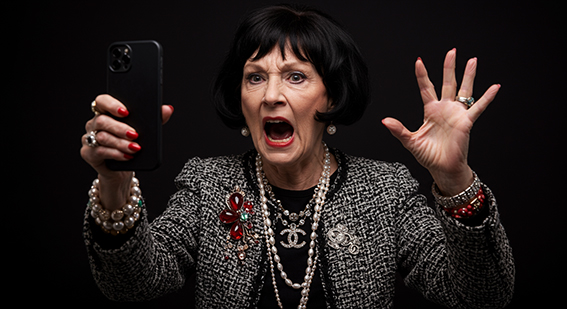
When I showed her my valid disabled parking disc, she sneered and said, “You can buy those anywhere,” before waving me off like I was some kind of fraud. She didn’t stop there — she berated me in front of strangers, making sure I felt humiliated, belittled, and dismissed. And I think she was filming me, just to twist the knife a little deeper.
This is what public shaming looks like when you live with an invisible illness. This is the quiet cruelty that people don’t see — or choose not to.
Later that day, I went online to my support group, still shaken, still trying to ground myself. I shared what had happened — and the response was overwhelming. Hundreds of people replied. Not only had they been through similar encounters, but many admitted they now prepare for them. Mentally rehearsing what they’ll say. Keeping their documents close at hand. Some even avoid using accessible bays altogether to sidestep the confrontation.
Think about that for a second: people with real, diagnosed disabilities are bracing themselves to be challenged for using a parking spot designed for them.
Yes, we appreciate when others understand that disabled bays exist for a reason — but now it’s gone further. There’s a new layer of judgment: if your disability isn’t immediately obvious, you’re assumed to be lying. The burden of proof is dumped on the person already struggling.
MS is real. The fatigue, the spasms, the brain fog, the pain — it’s all real. And believe me, if I could trade my disabled badge for a healthy body and a regular parking spot, I would.
But here’s the thing: not all disabilities are visible. And just because someone “looks fine” doesn’t mean they aren’t struggling.
To that woman, and to anyone else who thinks they can play judge and jury in a parking lot: your ignorance isn’t just offensive — it’s dangerous. You’re not protecting the system; you’re making life harder for people already carrying more than you can imagine.
So the next time you see someone in a disabled bay who “doesn’t look disabled,” maybe consider this: your eyes aren’t qualified to diagnose anyone. And a little kindness costs you nothing.
Editor’s Note
I hesitated to share this — but the truth is, silence doesn’t protect us. Sharing these moments matters, because every time we speak up, we make it harder for ignorance to win. If you live with an invisible illness, know this: I see you. And if you don’t, I hope this helped you see us more clearly. Everyone deserves the right to move through the world with dignity — no explanations, no justifications.
Nasty old woman shouting and holding up her cellphone.